How to Choose a Wedding Venue: 12 Steps, Questions to Ask & Checklist
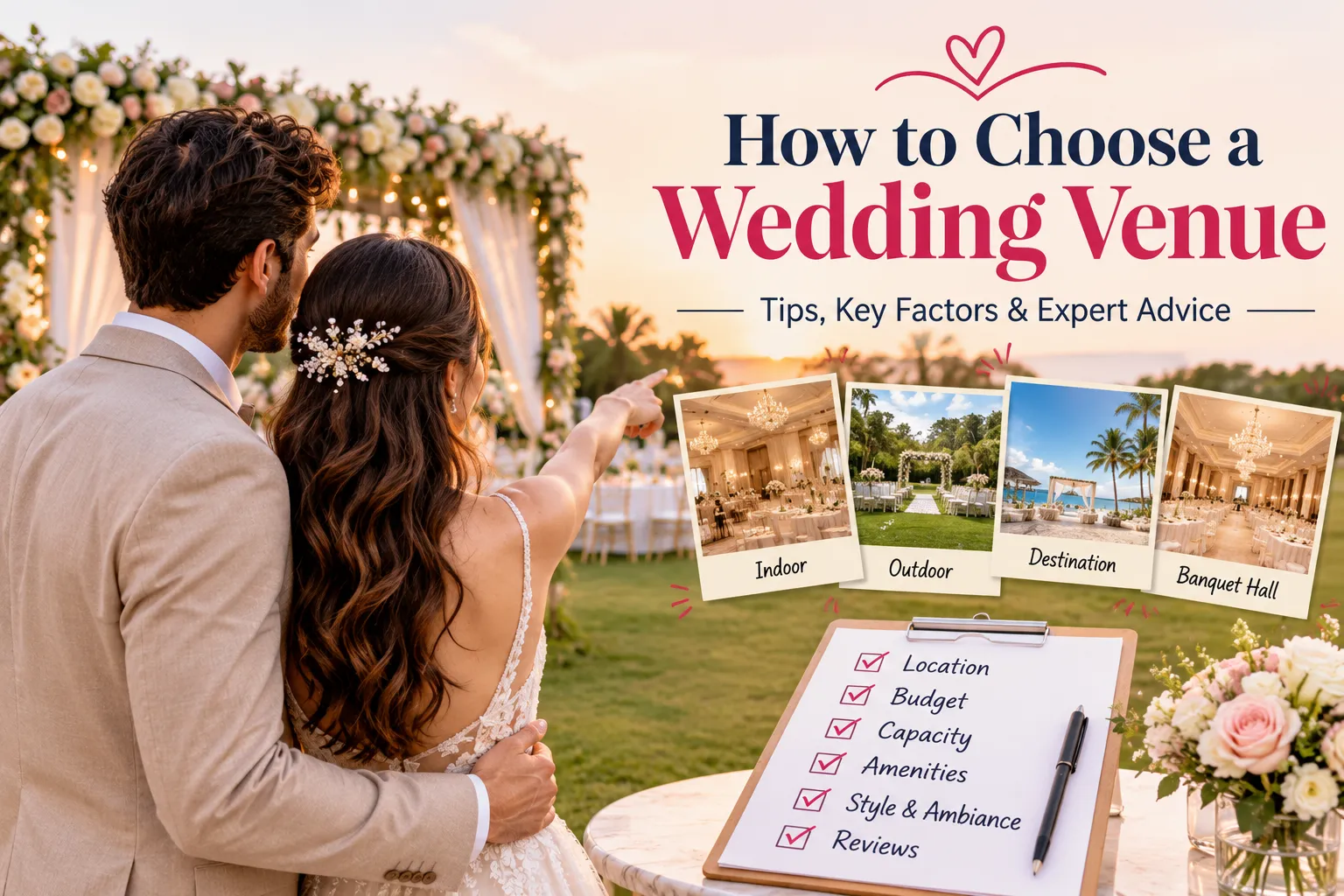
Choosing a wedding venue is the first big decision of wedding planning, and it shapes almost every choice that follows: your date, your guest list, your budget, even your caterer. This guide walks you through exactly how to choose a wedding venue, step by step, with the questions to ask on a tour, the costs people forget, and a printable checklist to compare your shortlist side by side.
Quick Answer: How Do You Choose a Wedding Venue?
To choose a wedding venue, set your budget and estimated guest count first, then pick a general location and two or three possible dates. Shortlist five or six venues that fit your capacity, style, and price, tour your top three at the same time of day as your wedding, ask about everything that is (and isn't) included, and compare total costs, not just the rental fee, before you sign a contract.
The short version:
- Set your total budget and venue budget
- Estimate your guest count
- Choose a location (city or region)
- Pick a season and two or three dates
- Decide on one venue or separate ceremony and reception sites
- Define your style and must-haves
- Build a shortlist of five or six venues
- Request pricing and availability
- Tour your top three in person
- Ask the right questions
- Compare the true total cost
- Read the contract carefully, then book
Why Your Venue Should Be the First Thing You Book
Your venue decides your wedding date (you can only marry on a day it's free), caps your guest list (every room has a fire-code capacity), and often determines your caterer, your rentals, and your end time. It is also usually the largest single line in the budget. According to Real Weddings Study, couples spent anywhere from about $8,000 for the venue alone to about $22,000 for a venue package that included catering, alcohol, and rentals, out of an average total wedding cost of $33,000.
Because so much depends on it, most planners recommend booking the venue before any other vendor. Popular venues in big cities can book out a year or more ahead for Saturdays in peak season.
Step 1: Set Your Total Budget and Venue Budget
Start with the total amount you are comfortable spending on the whole wedding, then decide how much of it the venue can take. A common rule of thumb is to plan for venue and catering together to take roughly 40–50% of your total budget, so if your total is $30,000, aim for a venue-plus-food figure of around $12,000–$15,000.
Write down two numbers before you start looking:
- Your ideal venue spend: what you'd like to pay
- Your walk-away number: the most you'll pay, including fees, tax, and gratuity
Having a hard ceiling stops you from falling in love with a venue you can't afford.
Step 2: Estimate Your Guest Count
You don't need a final guest list yet, but you need a realistic range. Sketch a quick list of must-invite family and friends, then add a "maybe" column. The national average is about 116 guests, but your number is the one that matters.
Your guest count affects your venue choice in three ways:
- Capacity: a 200-person ballroom feels empty with 60 guests, and a 100-person barn can't legally hold 150.
- Cost: many venues charge per person, so every guest adds to the bill.
- Layout: you'll need room for dinner tables, a dance floor, a bar, and possibly a ceremony space.
Tip: Ask venues for their capacity for a seated dinner with a dance floor, not the standing-cocktail maximum. The numbers can be very different.
Step 3: Choose Your Location
Decide on the city, town, or region before you search. Think about:
- Where most guests live, and how far they'll travel
- Airports and drive times for out-of-town guests
- Hotels nearby for guests who need to stay overnight
- Whether it's meaningful to you, such as a hometown, a city you met in, or a destination
A local wedding keeps costs and logistics simpler. A destination wedding usually means fewer guests but more planning.
You can browse wedding venues by city on Celebrateio to see what's available in each area before you narrow down.
Step 4: Pick a Season and Two or Three Dates
Venue prices change with demand. Saturdays in late spring and early fall are the most popular, and the most expensive, in much of the US.
You can often save by choosing:
- Fridays or Sundays instead of Saturdays
- Off-season months (in most of the US, that's roughly January to March)
- Weekday or daytime weddings, such as a brunch reception
Bring two or three acceptable dates to venue inquiries. Flexibility gives you more options and more negotiating power.
Step 5: Decide on One Venue or Two
Do you want the ceremony and reception in the same place?
| Option | Pros | Cons |
|---|---|---|
| One venue for both | No transport between sites, one coordinator, often cheaper, easier for guests | Fewer ceremony location options; may need a quick room "flip" |
| Separate ceremony and reception venues | Ceremony in a meaningful place (like a house of worship or a scenic spot), more variety | Transportation costs, timing gaps, two sets of fees and rules |
If you choose two sites, keep the drive between them under about 20–30 minutes so guests don't lose momentum.
Step 6: Define Your Style and Must-Haves
Picture your wedding day. Is it a candlelit ballroom, a rustic barn, a city rooftop, or a beach at sunset? Your style narrows the search quickly. Common venue types include:
- Ballrooms and hotels: formal, all-in-one, with guest rooms on site
- Barns and ranches: rustic and spacious, often with outdoor ceremony space
- Lofts and industrial spaces: modern, flexible, a blank canvas for decor
- Waterfront venues: beaches, lakes, and harbors with built-in views
- Gardens and estates: natural beauty and great photos
- Restaurants: intimate, with food quality built in
- Wineries and breweries: relaxed and scenic, with drinks sorted
Then choose your top three must-haves. For example: "outdoor ceremony space, in-house catering, and room for 150." Everything else is a nice-to-have.
Step 7: Build a Shortlist of Five or Six Venues
Now you can search with purpose. Filter by location, capacity, style, and price, and save five or six venues that fit your must-haves.
On Celebrateio, you can filter venues by type (like barn and ranch, ballroom and hotel, loft and industrial, or waterfront), save favorites to a shortlist, and compare them in one place. For example, see wedding venues in New York City, Los Angeles, or Chicago.
Look beyond the photos at:
- Real reviews from couples
- Capacity and layout details
- What's included in the price
- Whether you must use in-house or approved vendors
Step 8: Request Pricing and Availability
Before you spend a weekend touring, send a short inquiry to each venue on your shortlist. Include:
- Your preferred dates (and backups)
- Estimated guest count
- Ceremony and reception, or reception only
- Your rough budget
Ask for their pricing guide or sample package, and confirm your date is open. This step alone usually cuts a shortlist of six down to three.
Short on time? Celebrateio's Get Matched tool asks four quick questions and sends your request to venues that fit your date and budget, so you can request pricing from several at once.
Step 9: Tour Your Top Three Venues
Nothing replaces seeing a venue in person. To get the most out of each tour:
- Visit at the same time of day as your wedding to see the real light, temperature, and sun position for photos.
- Ask to see the venue set up for an event, or ask for photos from real weddings in the same room.
- Walk the guest journey: parking, entrance, restrooms, ceremony site, cocktail area, reception room.
- Check accessibility: ramps, elevators, and step-free routes for older or disabled guests.
- Meet the coordinator. You'll work with this person for months, so make sure you communicate well.
- Take photos and notes so you can compare venues fairly afterward.
Step 10: Questions to Ask When Touring a Wedding Venue
Bring this list on every tour.
Availability and capacity
- Is our date available, and how long can you hold it?
- What is the maximum capacity for a seated dinner with a dance floor?
- Do you host more than one wedding per day?
Pricing and what's included
- What is the rental fee, and what does it include (tables, chairs, linens, setup, cleanup)?
- Is there a food and beverage minimum?
- Are tax, service charges, and gratuity included in the quote?
- What is the deposit, and what is the payment schedule?
- What is the cancellation and postponement policy?
Vendors and catering
- Do we have to use in-house catering or an approved vendor list?
- Can we bring our own alcohol? Is there a corkage fee?
- Is there a cake-cutting fee?
Timing and rules
- How many hours are included, and what does overtime cost?
- When can vendors arrive for setup, and when must everything be cleared?
- Are there noise restrictions or a music curfew?
- Are candles, confetti, sparklers, or open flames allowed?
Logistics
- What is the rain or weather backup plan for outdoor spaces?
- How much parking is there, and is valet available?
- Is there a getting-ready room for the couple and wedding party?
- Is there an on-site coordinator on the wedding day?
- Do you have liability insurance requirements for us or our vendors?
Step 11: Compare the True Total Cost
The rental fee is rarely the full price. To compare venues fairly, add up everything each one will really cost:
- Rental fee (site fee)
- Food and beverage, or the food and beverage minimum
- Service charge (often 18–25% at full-service venues)
- Sales tax
- Rentals the venue doesn't provide (tables, chairs, linens, tableware, lighting)
- Required extras, such as security, cleaning, an event insurance policy, or a mandatory coordinator
- Overtime if you'll likely run past the included hours
- Transportation if guests need shuttles
A "cheap" blank-canvas venue can end up costing more than an all-inclusive one once you add rentals and staffing. Put the totals side by side before deciding.
Step 12: Read the Contract, Then Book
Once you've chosen, ask for the contract and read every line before signing. Make sure it states:
- Your exact date, start and end times, and the spaces you're renting
- The full price, every fee, and the payment schedule
- What's included, in detail
- Cancellation, postponement, and refund terms
- Who is responsible for damage, cleanup, and insurance
- The name of your on-site contact
Get every verbal promise in writing. Once the deposit is paid, your date is officially locked in, and you can start booking the rest of your vendors.
Wedding Venue Comparison Checklist
Use this table to compare your top three venues side by side.
|
| Venue 1 | Venue 2 | Venue 3 | | --- | --- | --- | --- | | Date available? |
|
|
| | Seated capacity |
|
|
| | Rental fee |
|
|
| | Food & beverage minimum |
|
|
| | Service charge & tax |
|
|
| | Rentals needed (extra cost) |
|
|
| | Estimated true total |
|
|
| | Hours included / overtime cost |
|
|
| | In-house catering required? |
|
|
| | Outside alcohol allowed? |
|
|
| | Rain backup plan |
|
|
| | Parking & accessibility |
|
|
| | Getting-ready rooms |
|
|
| | Hotels nearby |
|
|
| | Gut feeling (1–10) |
|
|
|
Common Mistakes to Avoid When Choosing a Wedding Venue
- Booking before setting a budget. It's easy to fall for a venue you can't afford.
- Ignoring the guest count. Too big feels empty; too small is uncomfortable and may break fire codes.
- Comparing rental fees instead of total costs. Fees, rentals, and minimums add up fast.
- Skipping the rain plan. Every outdoor venue needs a backup you'd actually be happy with.
- Touring at the wrong time of day. A sunny noon visit tells you little about a 6 p.m. reception.
- Forgetting guests' needs. Parking, accessibility, and hotels matter to the people you invite.
- Not reading the vendor rules. Some venues restrict which caterers, bands, or photographers you can hire.
Frequently Asked Questions About Choosing a Wedding Venue
How far in advance should you book a wedding venue?
Most couples book their venue 10 to 14 months before the wedding, and popular venues for peak-season Saturdays can book up to 18 months ahead. If you're flexible on day, month, or venue type, you can often find good options with six months' notice or less.
How much does a wedding venue cost?
It varies widely by city, season, and what's included. According to The Knot 2025 Real Weddings Study, couples spent from about $8,000 for the venue alone to about $22,000 for a venue that included catering, alcohol, and rentals. Big cities and peak dates cost more; off-peak days and smaller towns cost less.
What should I look for in a wedding venue?
Look for a venue that fits your budget, guest count, location, and style, and is available on your date. Then check what's included, vendor restrictions, the rain plan, parking, accessibility, nearby hotels, and how responsive the coordinator is.
How many wedding venues should you visit?
Tour three venues in person after narrowing a longer shortlist of five or six by email or phone. Visiting more than four or five usually adds confusion rather than clarity.
Should you book the venue or the date first?
Choose a few acceptable dates first, then find a venue that's free on one of them. If a specific venue matters most to you, be flexible on the date and take whatever it has open.
What questions should I ask a wedding venue?
The most important questions cover availability, seated capacity, total cost (including service charges and tax), what's included, catering and alcohol rules, the timeline and overtime fees, the rain plan, and cancellation terms. See the full list of questions to ask when touring a venue above.
Is it cheaper to have the ceremony and reception at the same venue?
Usually, yes. One venue typically means one rental fee, no transportation between sites, and less vendor setup. Many venues also discount the ceremony space when you book the reception with them.
What is a food and beverage minimum?
A food and beverage minimum is the least you must spend on catering and drinks at a venue. If your order comes in below that amount, you'll usually pay the difference anyway, so check it against your guest count before signing.
Final Thoughts
The right wedding venue fits your budget, holds your guests comfortably, matches the feel you want, and makes the day easy for everyone who attends. Start with the numbers (budget and guest count), shortlist with your must-haves, tour with a list of questions, and compare true total costs before you sign.
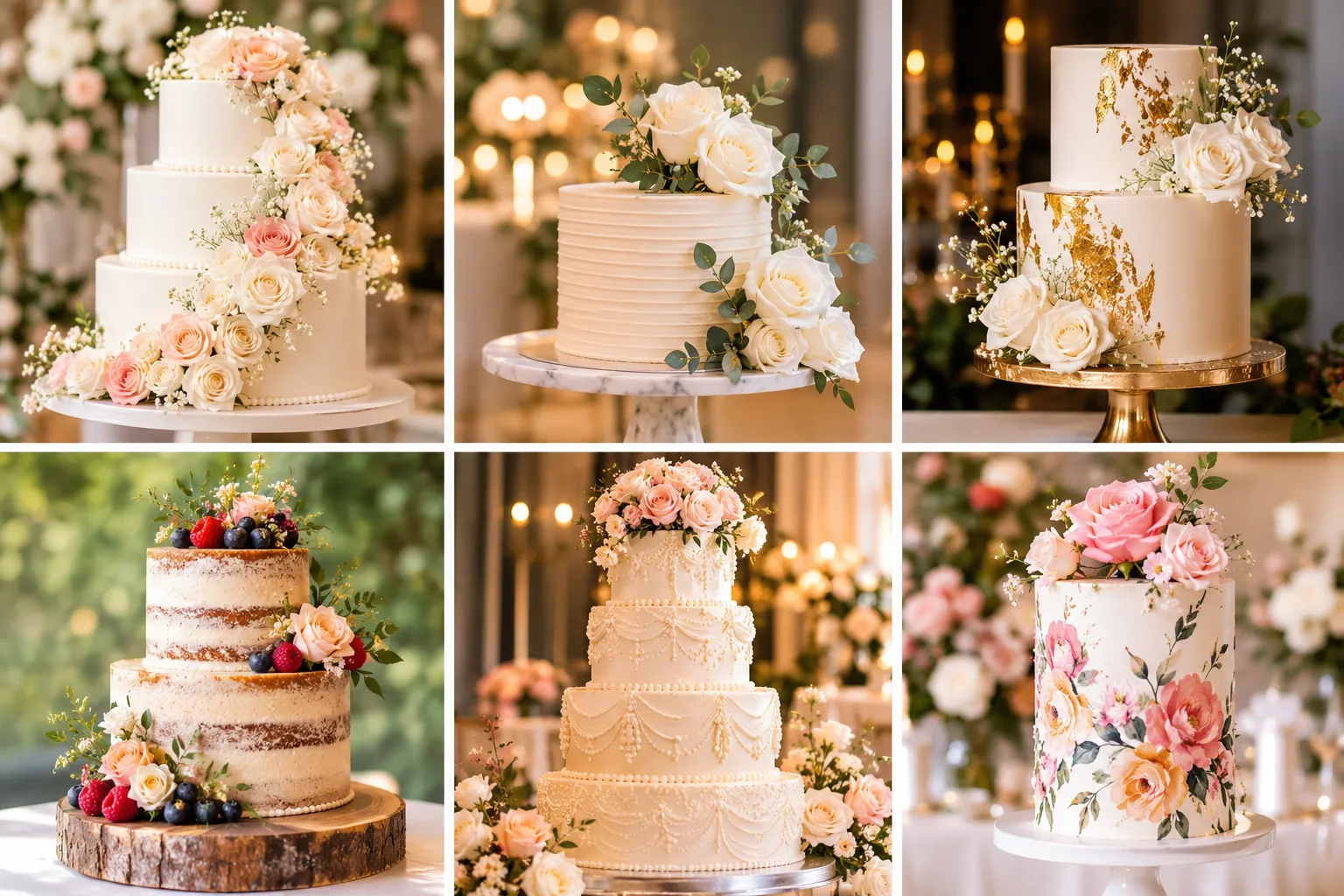
Ready to start? Compare wedding venues near you on Celebrateio, or let us match you with venues that fit your date and budget. Once your venue is booked, read our guides to what RSVP means and how guests should respond and 150+ wedding cake designs for the next steps of planning.
Comments